Hyper-V Amigos Chat at the Grand Canyon

image

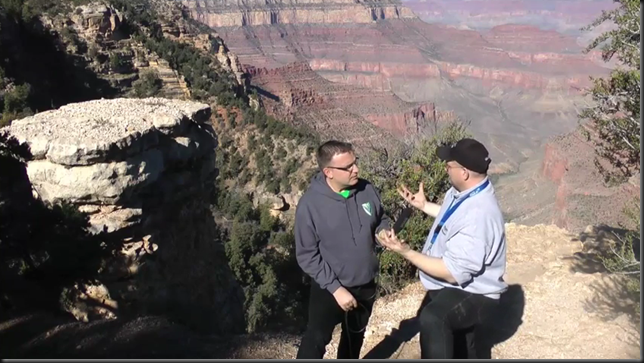
Yes, you read that correctly, there was a Hyper-V Amigos Chat at the Grand Canyon. Last year, during the last week of October and the first week of November in 2015 my friend Carsten Rachfahl (@hypervserver) and I were in in the USA for Veeam’s VEEAMON 2015 and the Microsoft Global MVP Summit. In between those two events, we – two of the legendary Hyper-V Amigos – had to telecommute. No problems for us, we’re masters at remote working. We’re agile, flexible, dynamic, resourceful and mobile so we drove to the Grand Canyon to muse on our thoughts and recorded some videos on our experience at VEEAMON 2015 and our first experiences with the Windows server 2016 Technical Previews so far.

The results are nothing but amazing footage of a Hyper-V Amigos chat at the Grand Canyon. Both Hyper-V MVPs, Veeam Vanguards and Dell Tech Center Rockstars discuss what they know best and love to do whilst on their way to the Microsoft MVP Summit in a roundabout kind of way Smileimage

Enjoy people, have a great 2016. Click on the image above or follow this link:Hyper-V Amigos Chat at the Grand Canyon. More info on these technologies can also be found at http://hyper-v-amigos.net and http://hyper-v-server.de.

BitLooker In Veeam Backup and Replication v9

When your backup size is bigger than the amount of disk space used in the virtual machine you might wonder why that is. Well it’s deleted data who’s blocks have not been released for reuse by the OS yet. BitLooker in Veeam Backup and Replication v9 as announced at VeeamOn 2015 offers a solution for this situation. BitLooker analyses the NFTS MFT to identify deleted data. It uses this information to reduce the size of an imaged based backup file and helps reduce bandwidth needed for replication. It just makes sense!

BitLooker In Veeam Backup and Replication v9

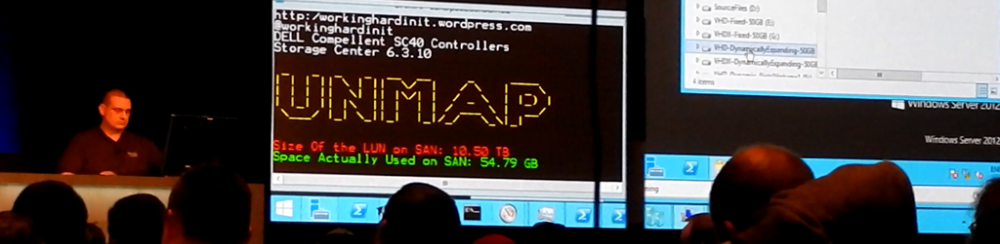
I really like these additions that help out to optimize the consumption of backup storage. Now I immediately wondered f this would make any difference on the recent versions of Hyper-V that support UNMAP. Well, probably not. My take on this is that the Hyper-V virtual Machine is aware of the deleted blocks via UNMAP this way so they will not get backed up. This is one of the examples of the excellent storage optimization capabilities of Hyper-V.

UNMAP

It’s a great new addition to Veeam Backup & Replication v9. Especially when you’re running legacy hypervisors like like Windows Server 2008 R2 or older, or (at the time of writing) VMware. When you’ve been rocking Windows Server 212 R2 for the last three years Hyper-V already had your back with truly excellent UNMAP support in the virtual layer.

I’m a Veeam Vanguard 2015

Veeam has announced it’s Veeam Vanguard program last month while I was on vacation. I am honored to have been nominated as 1 of 31 professionals world wide. Veeam states the following, which I consider to be a great compliment:

These individuals have been nominated as Veeam Vanguards for 2015. A Veeam Vanguard represents our brand to the highest level in many of the different technology communities in which we engage. These individuals are chosen for their acumen, engagement and style in their activities on and offline.

veeam_vanguard

Rick Vanover is spearheading this program together with the Veeam Product Strategy Team and the entire company is behind this initiative as you can read here What is the Veeam Vanguard Program?

Veeam now has a program like the VMware vExpert, Cisco Champion and Microsoft MVP programs. I’m honored to be nominated and I’m sure Veeam will execute this well as I have one very consistent experience with both Veeam employees and products: quality and dedication to deliver the best possible solutions for their customers. The fact that I’ve been nominated makes me feel appreciated by people whom I respect for their professionalism and skills. As I’m confortable acting as the tip of the spear implementing technologies at the organizations I support I kind of feel that being a Veeam Vanguard is a great fit Smile

I have shared insights, ideas and feedback with VEEAM before and I’m sure we’ll get plenty of opportunities to do even more of that in the future.

Using VEEAM FastSCP for Microsoft Azure to help protect my blog

My buddies in IT know about some of my mantras. The fact that I like “* in depth”. Backup in depth for example. Which is just my variant on the 3-2-1 rule in backups. Things go wrong and relying on one way to recover is risky. “One is none, two is one” is just one of the mantras I live by in IT. Or at least try to, I’m not perfect.

So besides backups in Azure I also copy the backup files I make for my blog outside of the VM, out of Azure. That means the BackWPup files and the MySQL dumps I create regularly via a scheduled job.

That copy is not made manually but is automated with VEEAM FastSCP for Microsoft Azure. It’s easy, free and it works.  I’ve blogged about it before but that blog might have been lost in the huge onslaught of Microsoft Ignite 2015 announcements.

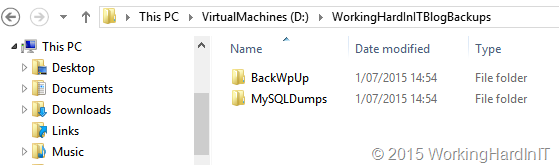
It’s all quite simple. First of all you need to create a data dump location for the backups we do on our blog server. That’s copied out by but VEEAM FastSCP for Microsoft Azure ensures I have an extra copy do those which doesn’t rely on Azure
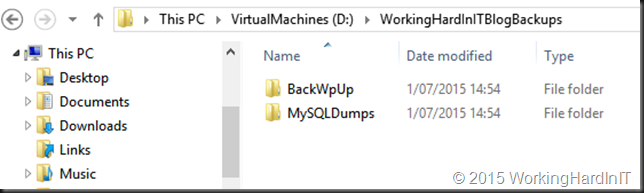
image


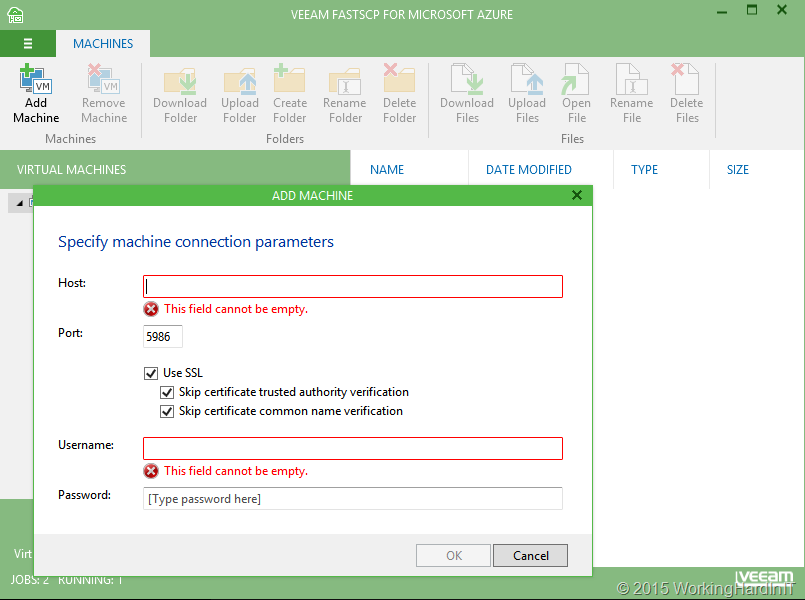
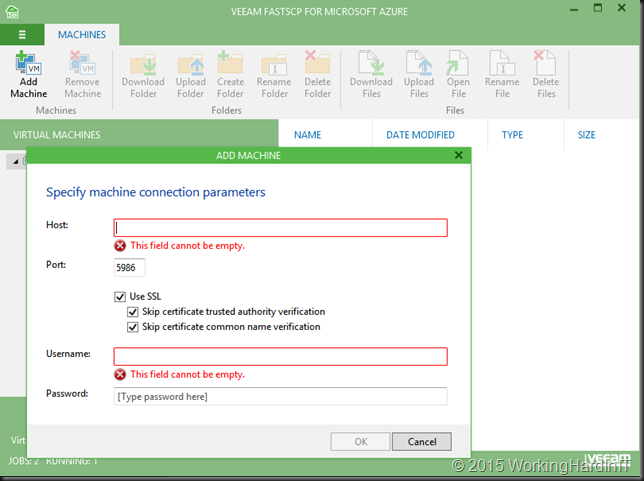
Add your VM in Azure to VEEAM FastSCP for Microsoft Azure
image

It’s easy, specify the information you can find about your VM on the Azure management portal. Optionally you can skip the SSL requirement and certificate verifications. Do note you need to use the correct PowerShell port (end point) for that particular VM in your Azure subscription.
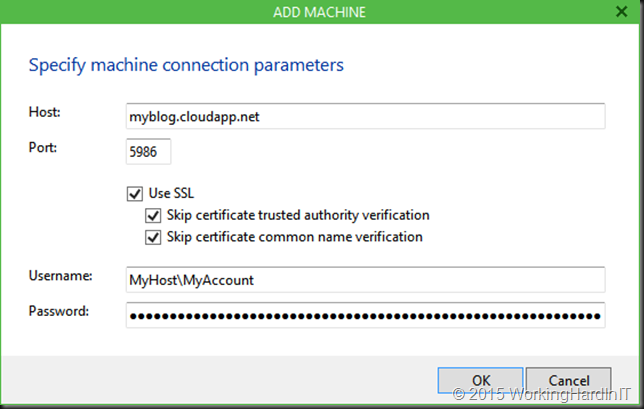
image

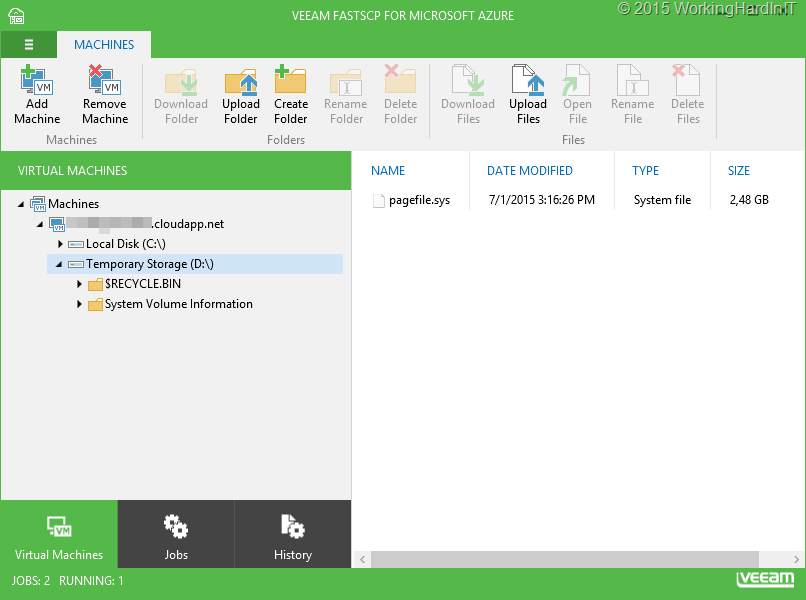
When successful you can browse the file system of your Azure VM.
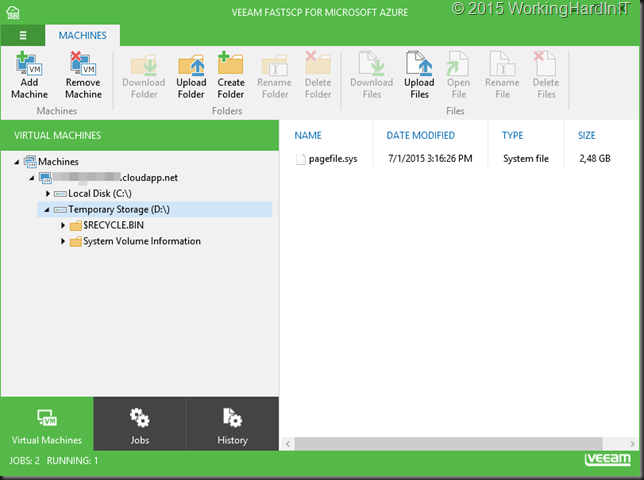
image

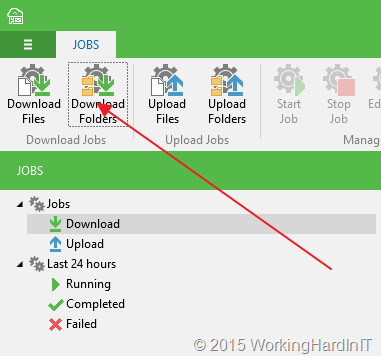
Create one or more jobs (depending on what & how you’re organizing your backups)
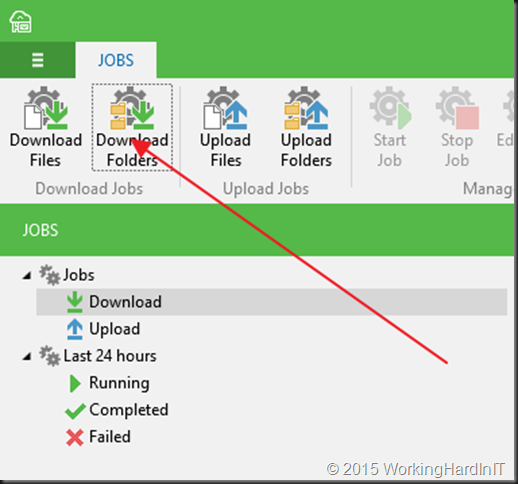
image

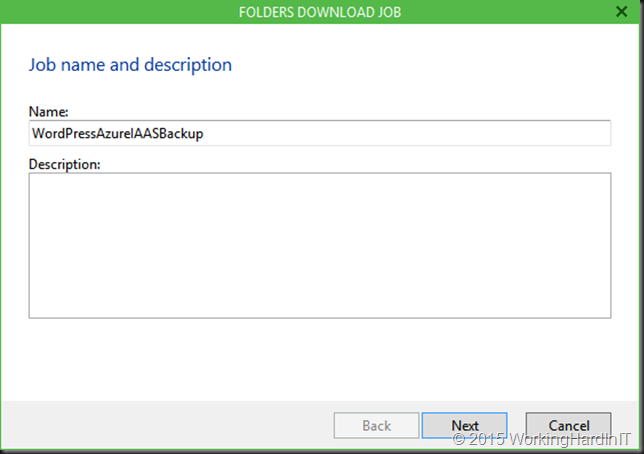
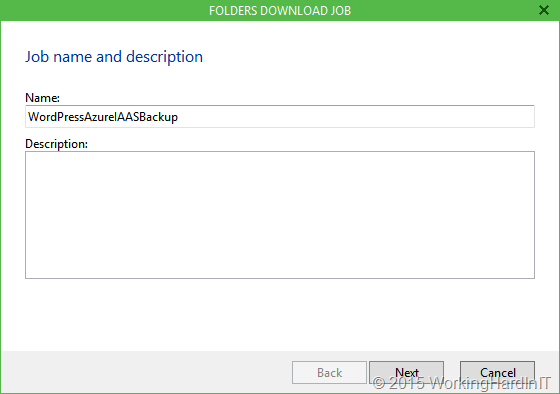
Give the job a descriptive name

image

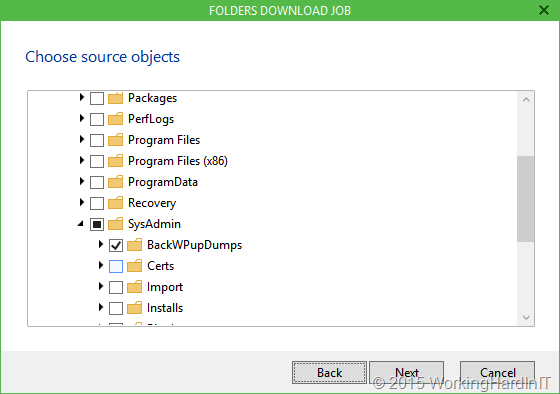
Select what folders on the Azure VM you want to backup by simply browsing to it.
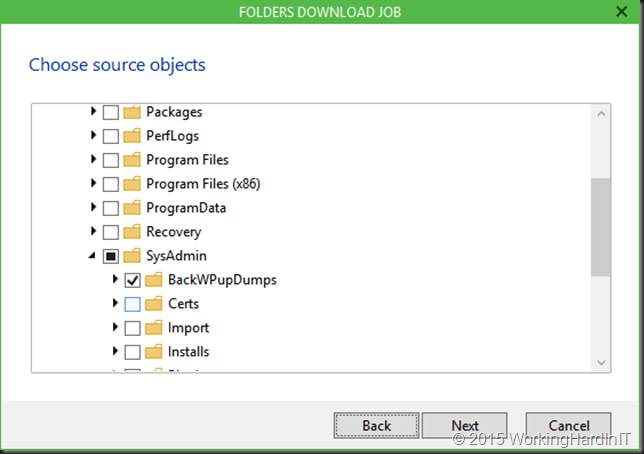
image

Select the target folder on the system where VEEAM FastSCP for Microsoft Azure is running by, again, simply browsing to it.
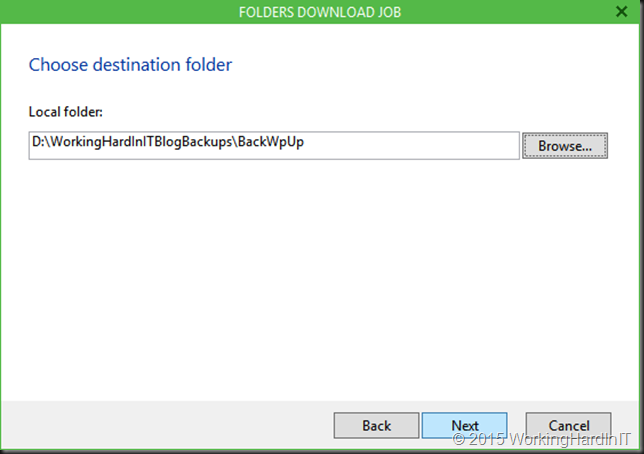
image

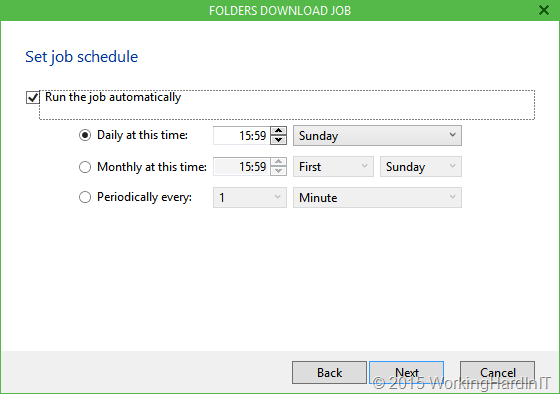
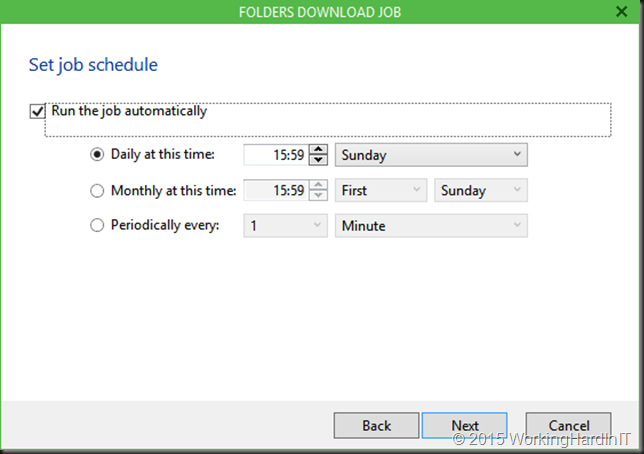
Set a schedule according to your needs
image

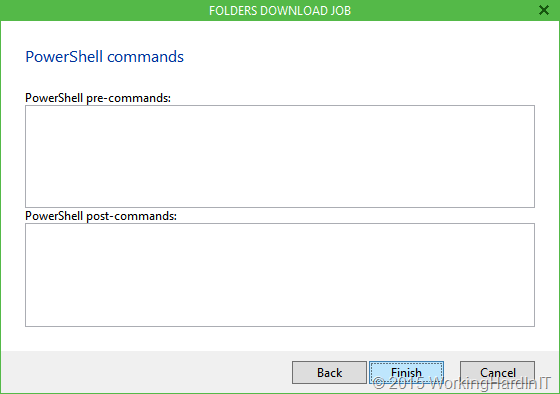
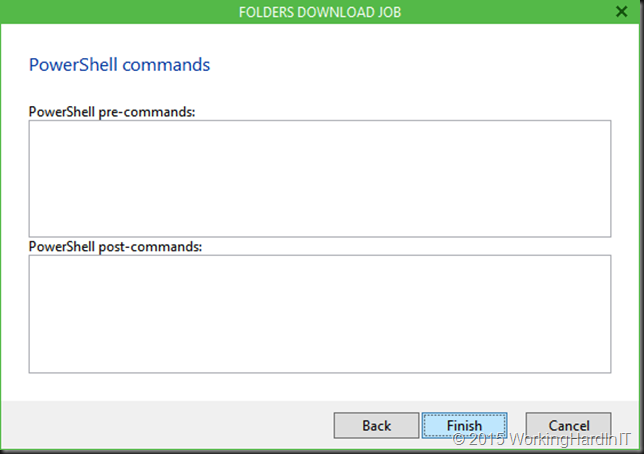
If you need to run some PowerShell before or after a download here’s the place to do so.
image

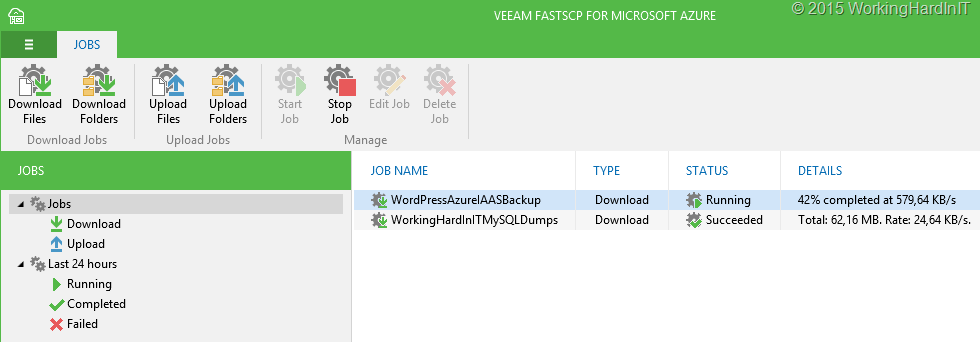
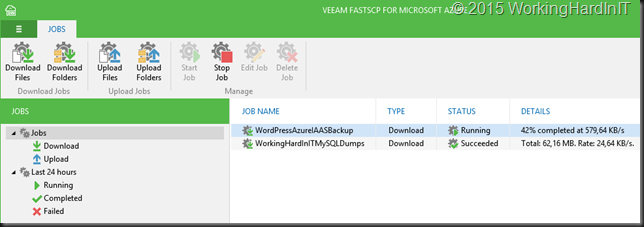
Click finish and hit Start Job to lick it of and test it. Here’s the WordPress Blog backup download job running.
image

By using VEEAM FastSCP for You can download folders and files to your system at home, to a virtual machine, whether this is on premise or also in the cloud. Perhaps even in AWS (IAAS) if you’re really paranoid. By doing a simple restore of your blog and changing your DNS entry you can even get it up and running if Azure would ever be the target of a major outage causing attack. You could even keep blogging about it Smile.

So do yourself a favor. Check it out!